
WE NOT ONLY PUMP YOUR TANK - WE CLEAN IT! 
WE NOT ONLY PUMP YOUR TANK - WE CLEAN IT!
Free Septic System Inspection ($99 Value) Free enzyme treatment, Financing Available
Request Service Now!
407-565-7044 Free Septic System Inspection ($99 Value) Free enzyme treatment, Financing Available
Request Service Now!
407-565-7044
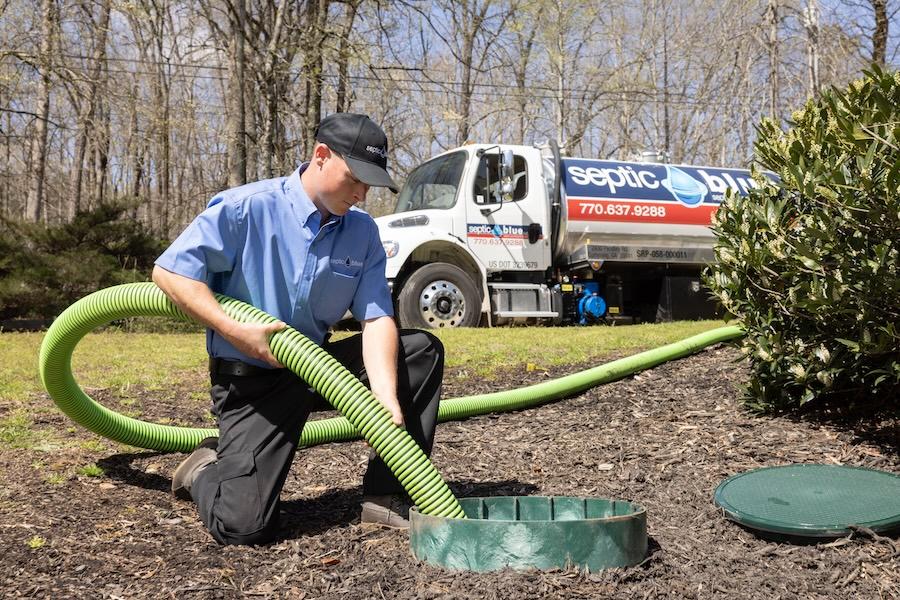
Roughly 30 percent of homes in Florida are NOT connected to the municipal sewer system, and those homeowners must figure things out on their own. A vast majority of these homeowners install a septic system, and are responsible for the maintenance and repairs.
An ounce of prevention is worth more than a pound of cure, though. With proper use and care, you can stretch out maintenance appointment dates and even prevent unnecessary repairs. One of the most important things these homeowners can do is practice mindfulness when it comes to what goes down the drains.
In this brief article brought to you by Septic Blue of Orlando, we break down what should NOT go down the drains. If you’d rather consult a septic pro from a reputable septic company, then contact the local team at Septic Blue.
Septic systems rely on helpful bacteria to break down organic waste. These microscopic organisms are great at processing human waste and toilet paper but cannot effectively handle synthetic materials – regardless of marketing claims suggesting otherwise.
Despite packaging claims, so-called “flushable wipes” represent one of the most damaging products homeowners regularly let into septic systems. These products don't disintegrate like toilet paper. Instead, they create dense mats that block outlet baffles and contribute to premature tank filling.
Baby wipes, disinfecting wipes, personal hygiene wipes, and makeup removal wipes all share this problematic characteristic.
Tampons, sanitary pads, applicators, and panty liners are also problematic. These products absorb water and expand to clog the conduits. Cotton swabs, dental floss, cigarette butts, and similar small items also contribute to blockages.
Finally, there are paper towels, facial tissues, and napkins. They seem similar to toilet paper but possess fundamentally different structural properties. They are designed to remain intact when wet, and that’s a problem for septic systems.
The bacterial colonies living in septic tanks play a central role by breaking down organic matter. Introducing harsh chemicals disrupts these populations, so avoid:
That helpful bacteria breaks down solid waste into space-saving sludge. Without them, your septic tank will fill faster and require more frequent septic pumping in Orlando.
Cooking oils, bacon grease, butter, and similar fats are even more insidious. They flow smoothly when hot but solidify as they cool. This creates a clog risk. If they make it inside septic tanks, fats and oils float to the top and resist breakdown by bacteria.
Property owners should never pour cooking grease down any drain. Instead, allow it to cool and solidify in disposable containers before throwing it in the trash. Wipe greasy cookware with paper towels before washing to minimize fat entering the plumbing system.
Coffee grounds, eggshells, and vegetable peels can also be a problem. Consider composting these instead, or throw them in the trash rather than overwhelming your septic tank.
Even with perfect usage habits, septic systems still require regular septic service. The most important of these are septic pumping and septic cleaning.
Pumping involves vacuuming out the majority of sludge, scum, and solid waste while septic cleaning is a more extensive job that includes cleaning the walls and baffles.
Don’t wait for the warning signs to turn into red flags and emergencies. Call or message Septic Blue to schedule your septic service today.
Every home relies on systems that work behind the scenes, and your septic system is no exception. Odors, backups, and costly repairs do not have to be…

If your home relies on a septic system, you know how important it is to keep it in top shape. At Septic Blue of Orlando, we’ve seen…
Many property owners rely on septic tanks without fully understanding how they work. You might look at your septic system and wonder: How does a septic tank…
If you’ve caught a whiff of something unpleasant in your yard, your septic system may be trying to tell you something. And it’s usually not good news.…