
WE NOT ONLY PUMP YOUR TANK - WE CLEAN IT! 
WE NOT ONLY PUMP YOUR TANK - WE CLEAN IT!
Free Septic System Inspection ($99 Value) Free enzyme treatment, Financing Available
Request Service Now!
407-565-7044 Free Septic System Inspection ($99 Value) Free enzyme treatment, Financing Available
Request Service Now!
407-565-7044
Undersized septic tanks can back up drains, and oversized ones waste money you'd rather spend on the well or a solar array. Getting the sizing right on an off-grid build is the cheapest step in the whole project, provided the numbers match your household load. Septic Blue helpsoff-grid homeowners choose their tanks wisely and set up long-term septic service plans around them. Keep reading for the sizing math and the requirements you need to meet before you break ground.
Size your septic tank by bedroom count rather than square footage or occupancy. The logic behind this rule is that bedrooms predict future load better than a current headcount does. A two-person household in a four-bedroom farmhouse will probably expand someday, and the tank has to handle the shift.
Bump up one tier if you plan to add a guest cabin, a workshop bathroom, or an in-law suite within five years. Underestimating could force a second permit and a full excavation later, which runs three to four times the original install cost.
Off-grid households vary wildly when it comes to daily water use, so a generic estimate won't cut it. Track a week of use at your current home and adjust for what will change once you move. Run through this quick audit:
Add the totals and multiply by household size. Your estimated daily sewage flow helps determine the required tank and drainfield size under Florida's sizing tables. For example, an estimated flow of 300 gallons per day requires a minimum 900-gallon effective septic tank.This is also the number that drives your septic pumping schedule down the road, so measure honestly.
Off-grid builds open up options that grid-tied homes rarely consider, like greywater diversion and composting toilets. Both change your tank math, and both come with permit hoops.
Greywater from showers, sinks, and laundry can route to a separate subsurface irrigation system, which cuts the load on your septic tank. The reduction lets you drop a tank size, though you still can't go below the bedroom-based minimum. Composting toilets also remove blackwater from the equation.
A word of caution on hybrid setups. If you install a composting toilet in the main bathroom but keep a flush toilet in a guest bath, size the tank for the flush toilet load, not the reduced load. Inspectors check for this during the final walkthrough, because a mismatched setup could fail on the spot. Talk to a septic company in Four Corners that has permitted these systems before you decide on a hybrid design.
Septic rules changed hands when regulation moved from the Department of Health to the Department of Environmental Protection. The core sizing tables stayed the same, but permit routing, inspection scheduling, and setback distances shifted.
Setback violations are the number one reason off-grid septic permits get denied on the first submission. Walk your site with the setback list in hand before you flag the tank location. If your lot is one acre or less and sits within a designated BMAP or other affected restoration area, you may be required to install an enhanced nitrogen-reducing system instead of a conventional septic system. Some protected areas impose those requirements on larger lots as well.
A percolation test measures how fast water drains through your soil, and it determines the size of your drainfield. The tank holds the waste, while the drainfield disperses the treated liquid. If you get the drainfield wrong, there’s no amount of septic cleaning that will keep the system working.
A soil evaluator can dig two to three test holes on the exact footprint where the drainfield will sit. Testing a spot 40 feet away or using a neighbor's report produces numbers that don't reflect your ground. Sandy soils drain quickly and support smaller drainfields. Clay-heavy pockets may need mound systems or engineered fill.
Schedule the perc test after you clear the building pad but before you finalize the foundation location. That way, if the test flags a problem, you can shift the house 30 feet without redrawing the whole site plan.
Concrete and fiberglass dominate the Florida market, and each fits a different off-grid scenario. Concrete tanks weigh 8,000 to 12,000 pounds empty, so they resist floating in high water table areas and last 40 to 50 years with routine septic pumping and septic cleaning. The trade-off is delivery. A concrete tank needs a boom truck with clear access, which gets complicated on heavily wooded lots or long soft-sand driveways.
Fiberglass tanks weigh 400 to 600 pounds and can arrive on a standard flatbed. Installers can hand-carry sections through tight sites, which matters when your build is a mile down a private road. The catch is buoyancy. In high water table zones, fiberglass tanks require anchoring straps and a concrete deadman to prevent floating during rainy season.
If you’re looking for a reliable local septic company, call Septic Blue to schedule a sizing consultation and lock in a septic service plan before your build breaks ground. We can handle the permit paperwork and install tanks matched to your household load and site conditions.
It’s tempting to treat septic pumping as optional maintenance until you encounter costly problems. The issue is that by the time you notice signs like…
Septic systems play a crucial role in properties without a public sewer system. Unfortunately, most properties rarely think about their on-site units and what happens to the…
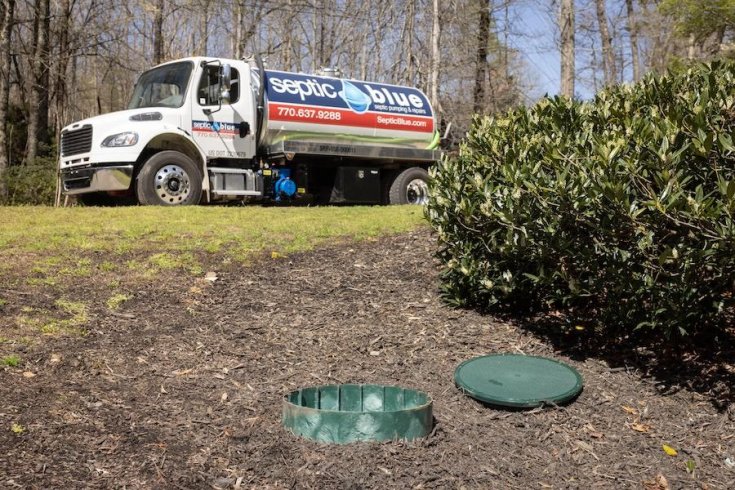
Undersized septic tanks can back up drains, and oversized ones waste money you'd rather spend on the well or a solar array. Getting the sizing…
The drainfield is the most expensive part of a septic system to replace, and the most common cause of failure has nothing to do with…